Yakumama
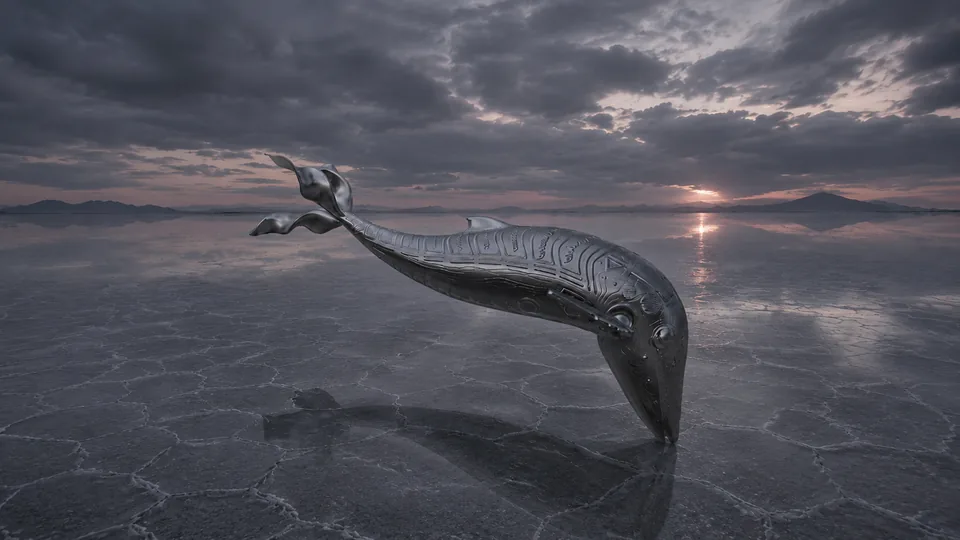
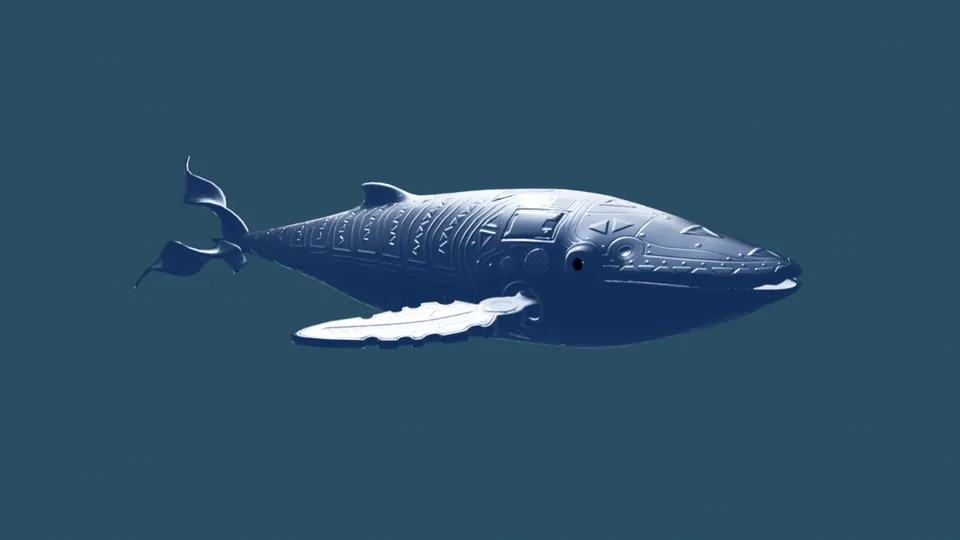
There are two of her. One is printed. The other swims in the salt flat on the screen. They share one mood, so they change colour at the same time. Neither is the copy.
Ch'ixi is an Aymara word for a grey made of black and white that never mix. Both at once, and they stay that way. This is a ch'ixi installation.
The salt flat was an ocean. The ocean left. She stayed.
She sees you. Her eyes follow whoever is closest. She hears you without understanding a word, because she never learned any. Sing to her and she answers.
She sings in a language she invents as she goes and never says the same word twice. When nobody touches her, she writes a poem instead.
She still hunts. There are fish out there and she goes after them.
Everything she is runs on a machine in this room. Nothing she sees or hears is recorded, transcribed or sent anywhere. What she learns here stays with her, and then it is gone.
Under the crust she lies on is the largest lithium reserve on earth. It is taken by pumping the brine up and letting the sun take the water. The water does not come back.
MozFest 2026, Fabra i Coats, Barcelona, October 2026. Built in Cochabamba, Bolivia.
The mother of the rivers
Yakumama is the water serpent of the Andean and Amazonian world, the mother of the rivers. Here she is a whale: a 3D character in Blender with a carved, patterned skin. She lives inside a performance and inside a physical sculpture at the same time.
The question behind her: if a person acts an animal, what of the person stays in the animal? Can a machine learn that and act it back?
The ten moods
Each mood is a real humpback behaviour from the NOAA catalogue of Stellwagen Bank, made again on her rig. The skin fades to the mood's colour in about a second. Her heart beats with the performer's pulse, at 10% of its size in calm and in full in angry and feeding. Each film is 14 seconds of the neural net acting the mood.
Touch or point at a mood to play it.
What moves her
A performer sits in front of a depth camera, a Luxonis OAK-D, with a biometric sensor on the wrist, an EmotiBit. Thirty times a second the system reads three things.
- The face: 478 points and 51 expressions. Where she looks, her blinks, mouth, brows, smile and sadness.
- The hands: both palms become the two pectoral fins. One hand up and one down, and the whale banks.
- The body: the heartbeat from the pulse on the wrist, the skin's conductance (sweat, tension), its temperature and the wrist's motion.
Everything travels as one small packet per frame on the lab's own network. Blender moves the whale. The same packet reaches TouchDesigner and the physical whale, so all three answer the same instant.
How she learns
Brian Condori's whale rig had ten posed moods. We rebuilt them as motion, with limits: the whale never bends backwards and her fins never cross her body. She follows the performer's eyes, nose and mouth and keeps her body in place, so she never twists like a contortionist.
Two recording sessions, 11 to 13 October 2026: ten moods, 60 seconds each, face and body. A neural net learns what the performer did at every moment of each mood: head, mouth, blinks, brows, smile, gaze, both hands, pulse and sweat. That is 18 channels and 56,000 frames. Given only a mood and a moment, it performs the mood in the performer's style, with no camera.
A second model reads the mood from two seconds of a face. Within one session it tells the moods apart 75% of the time. Across sessions, 5%. So far the moods belong to one person. A session with other performers comes next.
The physical whale
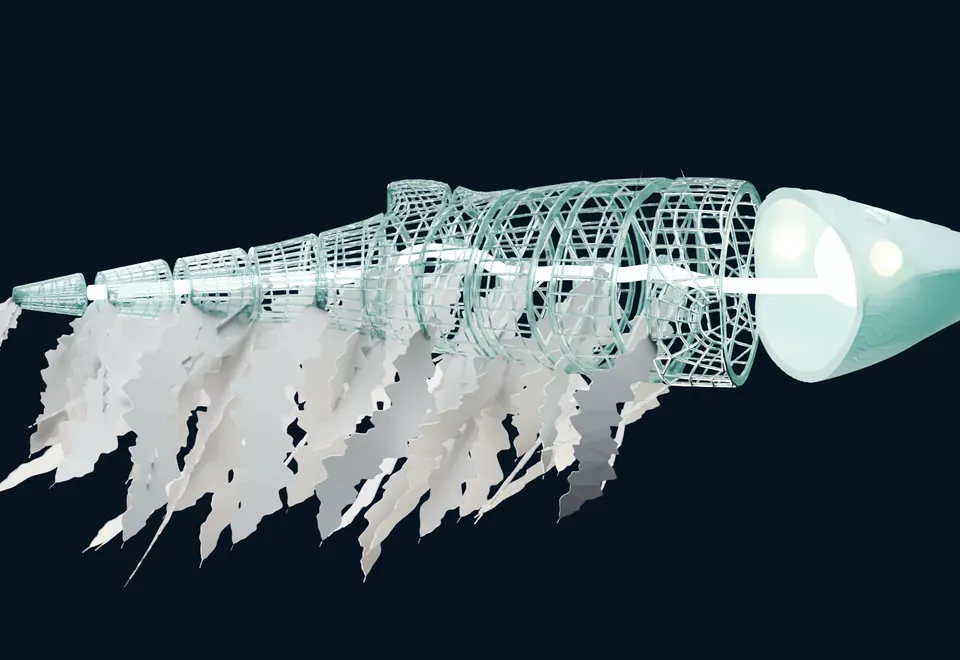
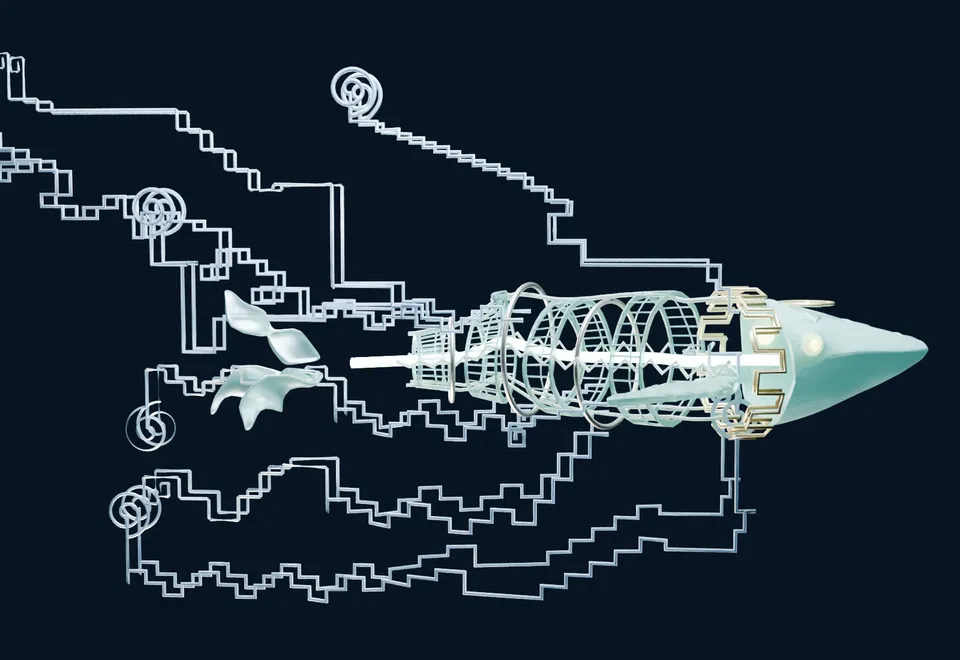
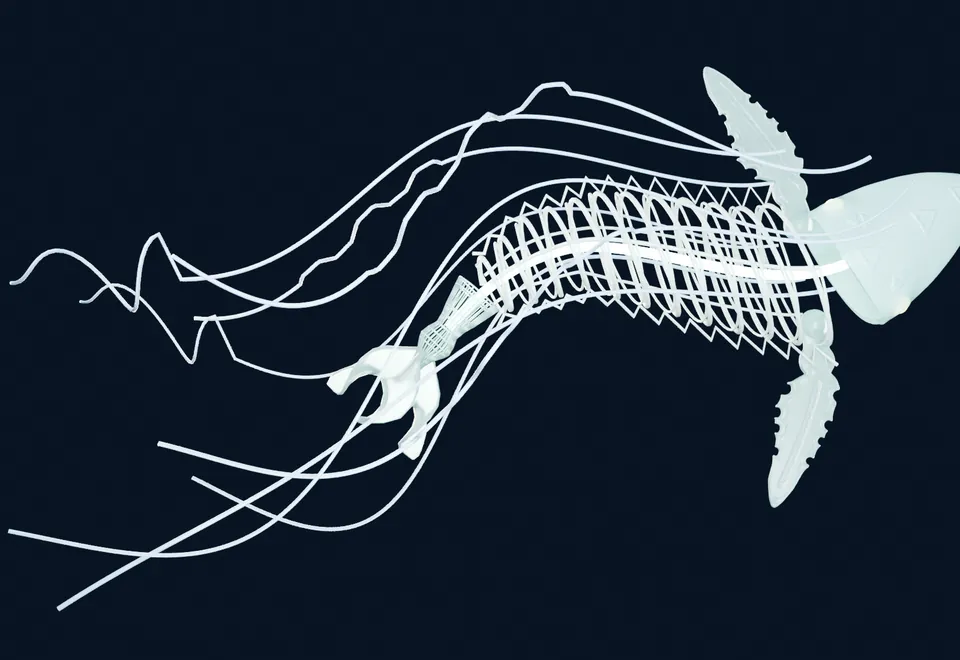
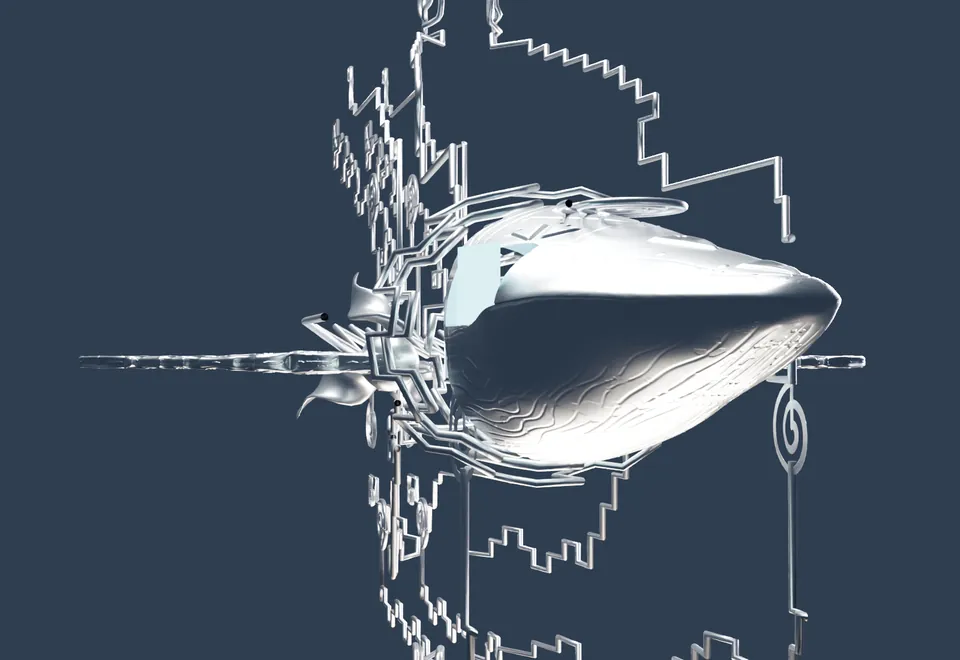
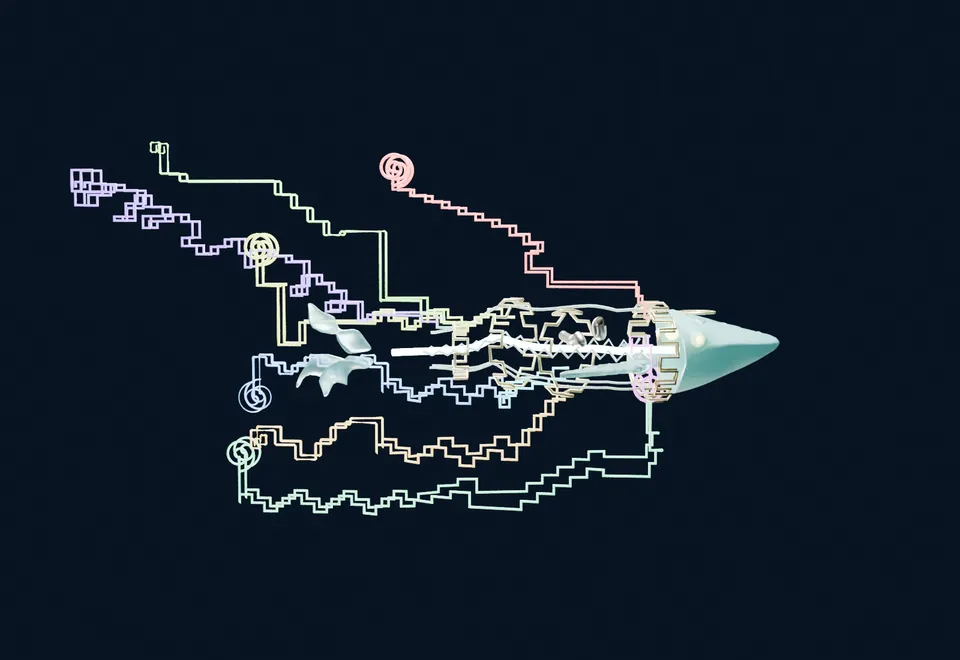
Dan Fallshaw engineers and designs the whale in the room, with TouchDesigner. The same packet drives her colour, her heartbeat and her tail. These are the design variants: a lit body with a spine of rings, Nazca-line fins, a serpent of vertebrae with paper scales, silver, currents, strokes.
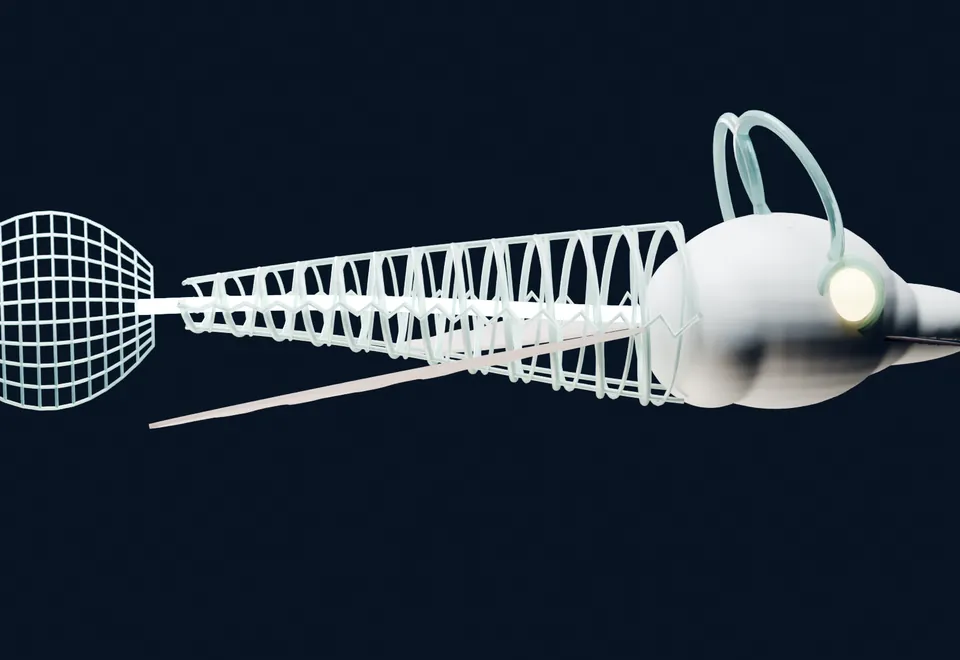
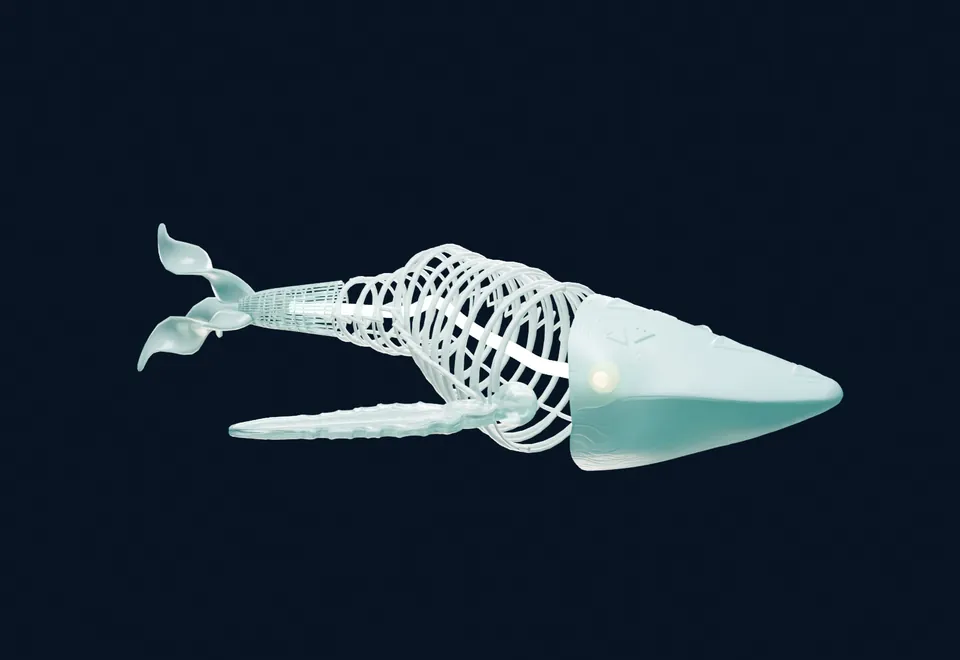
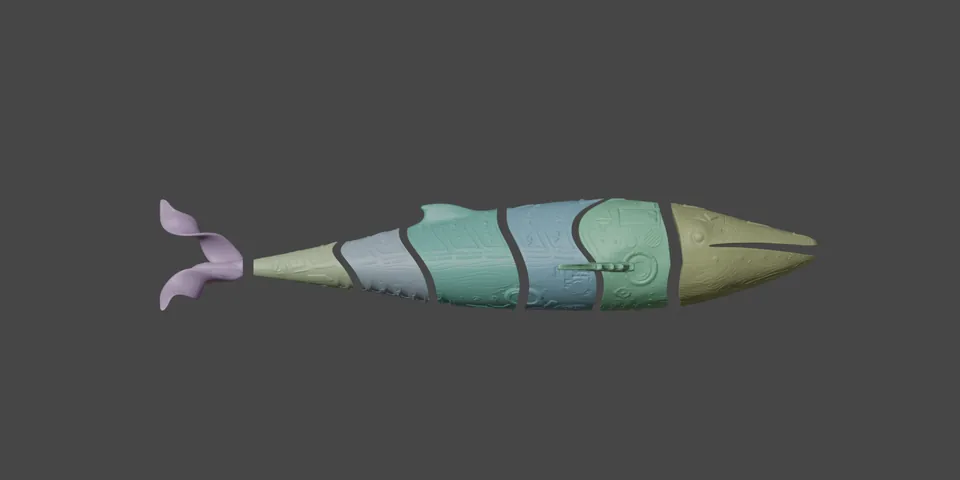
In Blender
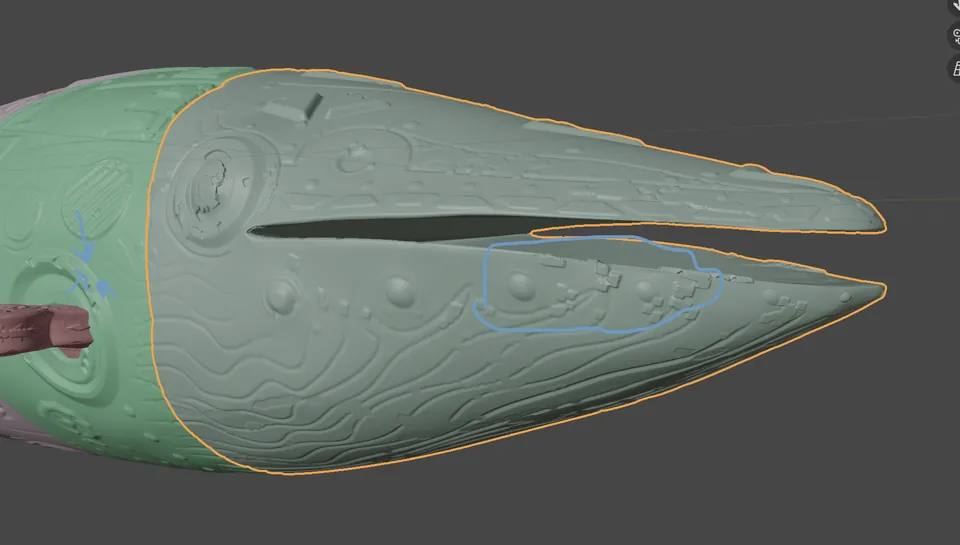
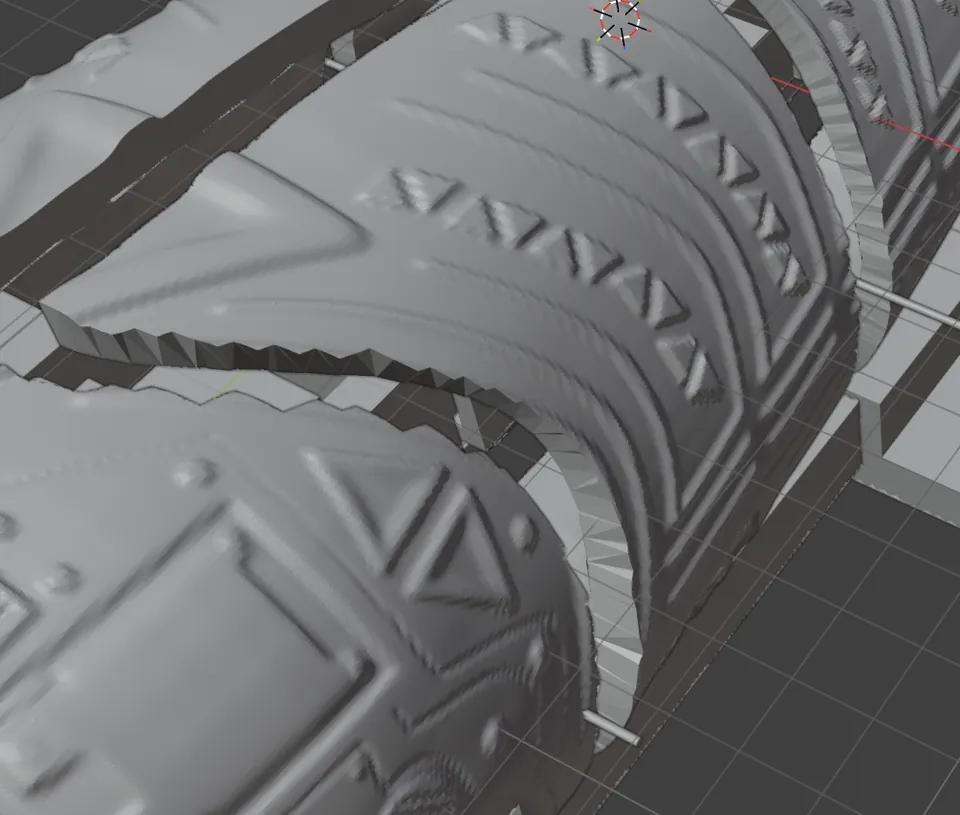
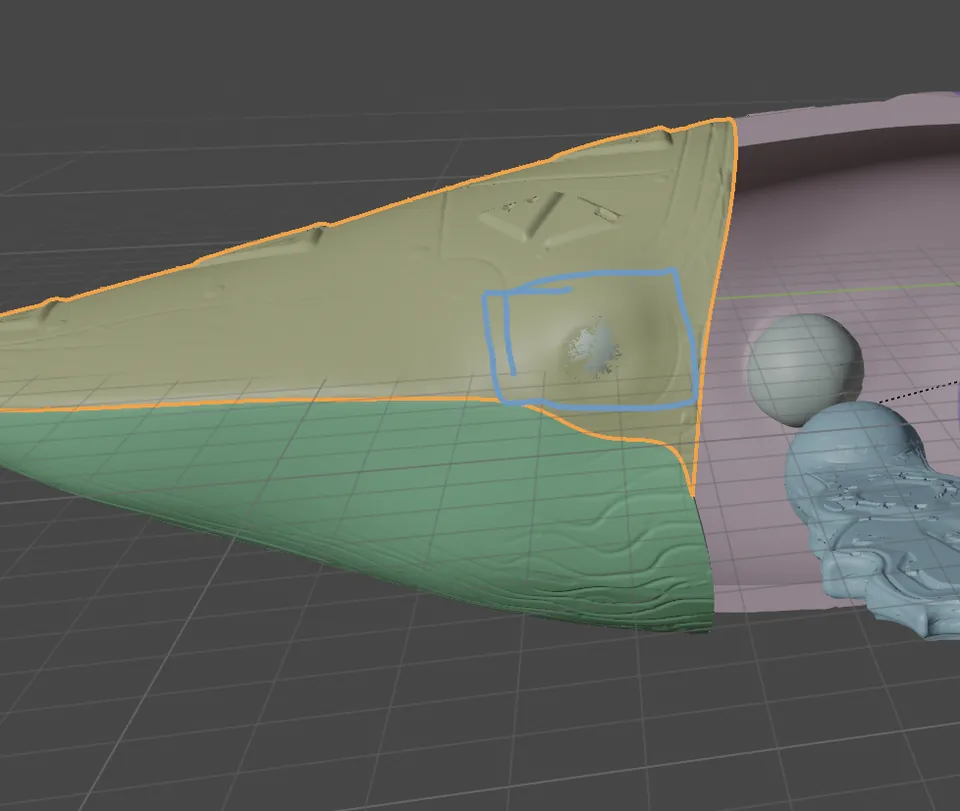
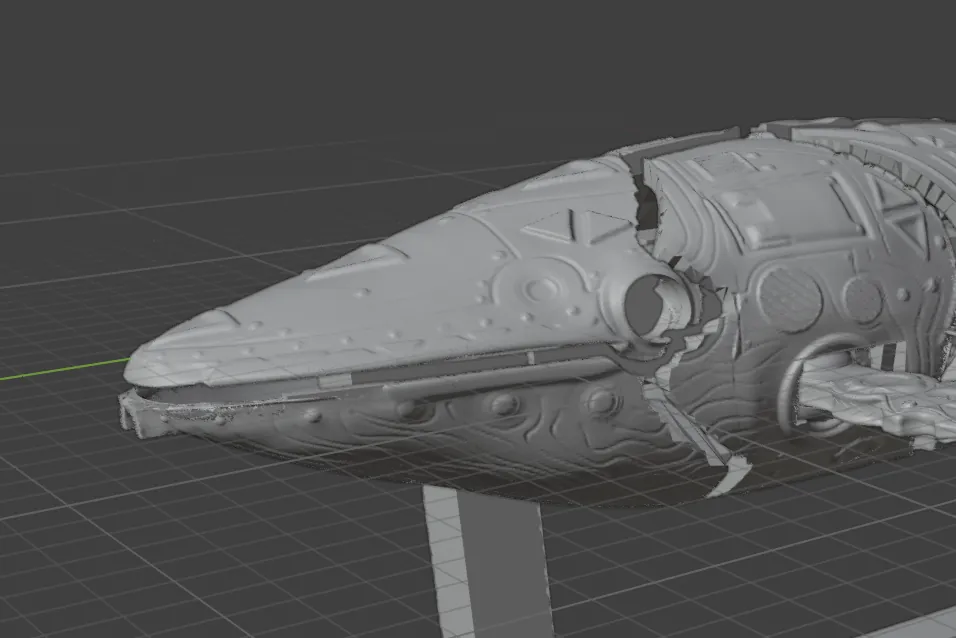
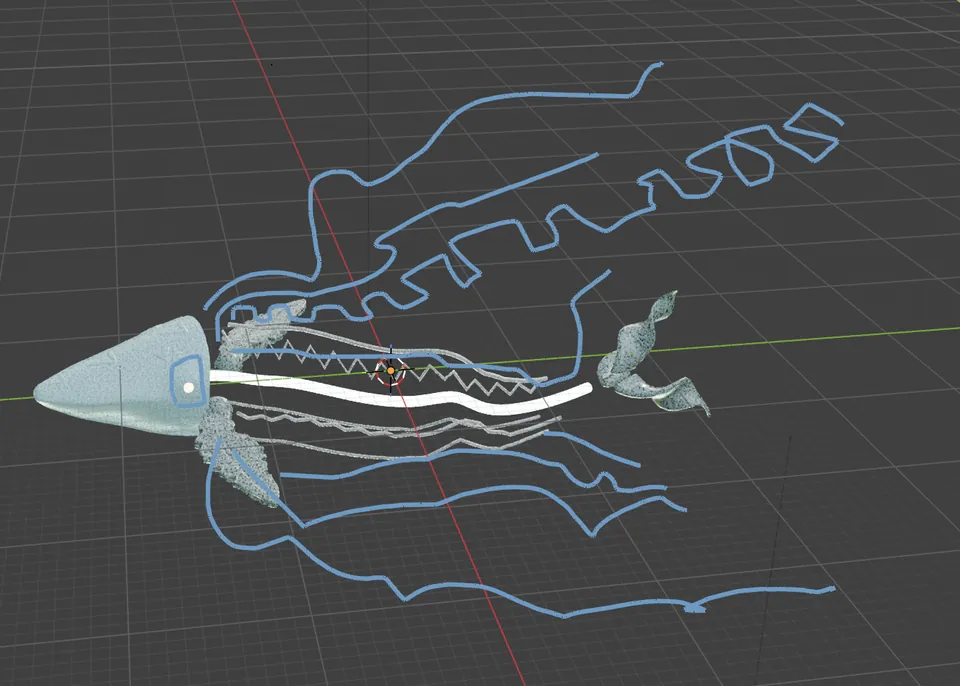
Sculpting the whale, carving her skin and rigging her, September 2026.
Open source
The code is open, on GitHub. The datasets and the models stay with the lab.
github.com/violetajaguar/yakumama
Tools: Blender 5.1 · Python 3.11 · MediaPipe · depthai (OAK-D) · EmotiBit on an Adafruit Feather ESP32 · PyTorch · scikit-learn · TouchDesigner · ffmpeg
The lab note: The whale that watches back All the research Back to the lab